Hard water scaling builds up faster in Arizona during the summer than in any other season. The extreme heat increases water temperature throughout your plumbing system, which results in minerals forming more aggressively on pipes, fixtures, and appliance components. Left untreated, scaling narrows pipes, shortens water heater life, and damages fixtures beyond repair. Understanding why summer accelerates this process helps you take action before the damage becomes permanent.
Why Arizona Has Some of the Hardest Water in the Country
Arizona’s water supply carries high concentrations of dissolved calcium and magnesium. These minerals enter the water as it passes through limestone and desert rock formations underground. The U.S. Geological Survey classifies most Phoenix metro area water as very hard. Glendale and surrounding communities receive water that often exceeds 15 grains per gallon of hardness.
For comparison, water above 10 grains per gallon qualifies as very hard by national standards. Many Arizona homes receive water at almost double that threshold. These minerals do not pose a health risk, but they cause significant damage to plumbing systems over time. Every gallon of untreated hard water that flows through your pipes leaves a thin mineral deposit behind.
Why Hard Water Damage Accelerates in June
June brings the intense heat of the Arizona summer. Daytime temperatures in the Glendale area reach an average high of 102 degrees Fahrenheit. That heat affects the water inside your pipes before it even reaches a faucet. Underground supply lines and exposed piping in attics and garages absorb ambient heat throughout the day.
Water heaters face the most intense scaling pressure during summer. Your water heater raises already-warm incoming water to your set temperature. In June, the tank works with water that enters warmer but still heats to the same output temperature. The heating element or burner concentrates minerals at the hottest contact points. Scale builds on the heating element, the tank walls, and the dip tube at the same time.
Where Scaling Causes the Most Damage
Scaling affects every component that touches hot water in your home. Some areas sustain damage faster than others because of temperature exposure and water flow patterns.
Water Heaters
Scale accumulates on the heating element and the bottom of the tank. That buildup insulates the element from the water it needs to heat. The heater runs longer to compensate, which raises your energy bills. The thick scale also traps heat against the tank floor, which accelerates corrosion from the inside. Most premature water heater failures in Arizona trace back to untreated hard water scaling.
Pipes and Supply Lines
Mineral deposits narrow the interior diameter of your pipes over the years. Reduced pipe diameter lowers water pressure at every fixture in your home. Hot water lines scale faster than cold water lines due to temperature differences. Older galvanized steel pipes corrode and scale at the same time, which compounds the restriction. Severe cases can reduce pipe capacity by 50 percent or more.
Fixtures and Appliances
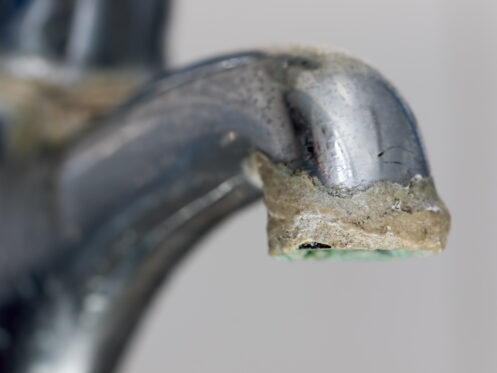
White or yellowish crusty buildup on faucets and showerheads signals active scaling. That same buildup forms inside dishwashers, washing machines, and ice makers. Scale clogs the small valves and spray arms inside these appliances. Dishwashers lose cleaning effectiveness, and washing machines leave residue on clothes. Replacing damaged appliances costs far more than preventing the buildup.
Signs of Hard Water Scaling in Your Home
Scaling often progresses inside pipes and appliances before visible signs appear. By the time you notice exterior symptoms, internal damage may already be significant. Catching these signs early limits the extent of permanent damage.
- White or chalky deposits
- Declining water pressure at fixtures
- Water heater taking longer
- Spots and film on dishes
- Stiff, dingy laundry
- Popping or rumbling sounds
The popping sounds from a water heater deserve particular attention. Scale traps small pockets of water beneath the mineral layer at the tank bottom. When the burner heats those pockets, the water flashes to steam and pops through the scale. That sound means a significant buildup already exists inside the tank. A plumber can flush the tank and assess whether the scale has caused lasting damage.
How a Water Softener Prevents Scaling
A water softener removes calcium and magnesium from your water before it enters your home’s plumbing. The system uses resin beads that attract and capture hard mineral ions. Sodium or potassium ions replace the calcium and magnesium in the treated water. The result is soft water that flows through your pipes without depositing minerals on any surface.
A properly-sized water softener protects every fixture and appliance in your home at once. Your water heater operates better without scale insulating the heating element. Pipes maintain their full interior diameter for consistent water pressure. Faucets, showerheads, and appliances stay clean and function as designed. The system pays for itself over time through reduced energy costs and fewer appliance replacements.
Sizing matters for Arizona’s extreme hardness levels. A system designed for moderate hardness won’t keep up with 15-plus grains per gallon of water in the Phoenix metro area. A plumber who understands local water chemistry can test your supply and recommend the right capacity. Oversizing a little bit ensures the softener handles demand spikes during heavy usage periods without allowing hard water through.
Protecting Your Plumbing From Permanent Damage
A water softener addresses the root cause, but existing scale may already sit inside your pipes and water heater. Flushing the water heater tank removes loose sediment and scale from the bottom. A plumber can perform this service as part of routine maintenance. Annual flushing extends the life of the tank and restores heating efficiency.
For pipes with significant buildup, a camera inspection reveals the extent of interior scaling. The camera shows where deposits narrowed the pipe and how severe the restriction is. This diagnostic step helps your plumber determine whether flushing, descaling, or repiping best addresses the problem. Guessing without visual confirmation often leads to incomplete solutions.
Lowering your water heater temperature to 120 degrees also slows mineral deposition. Higher temperatures accelerate scaling, so every degree above 120 increases buildup rates. Most households find 120 degrees more than adequate for daily use. This simple adjustment reduces scaling pressure on the element and tank walls throughout the summer.
If your home lacks a water softener and you notice signs of scaling, don’t wait until June. Every day of untreated hard water in the summer heat adds more mineral buildup to your system. Acting before summer protects your pipes, your water heater, and your appliances from damage that compounds with each passing week.
AZ Family Plumbing is a family-owned plumbing company serving Glendale, AZ and surrounding communities. Our Master Plumber owner brings over 25 years of hands-on experience to every job we take on. Our A+ BBB rating also reflects how hard we work to deliver total customer satisfaction. Finally, we offer discounts to seniors, military personnel, and first responders as a thank you. Contact AZ Family Plumbing for a free quote on water softener installation or plumbing service in Glendale today.