Spring is an exciting time, and many homeowners use this season to improve their landscaping. Unfortunately, certain shrubs, plants, and trees pose a threat to your sewer lines. Their roots can enter your pipes and cause major damage. This includes severe blockages that can cause sewer backups in your home. Understanding how root intrusion happens and avoiding certain shrubs and trees will save you time and money.
How Does Root Intrusion Happen?
The trees and shrubs in your landscaping have an instinct that makes them seek out moisture, oxygen, and nutrients. This is how root intrusions happen. Your underground sewer line provides a steady supply of nutrient-rich water that they will grow towards.
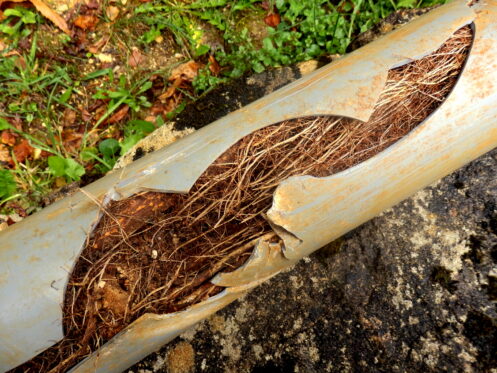
Tree and plant roots are naturally drawn to moisture and nutrient sources in the soil. When even a small crack or joint defect forms in a sewer line, tiny amounts of moisture and wastewater vapor can escape into the surrounding ground. Roots sense this damp environment and grow toward it. Wastewater is rich in nitrogen and phosphorus, which act as fertilizer in the soil, making the area around the pipe even more attractive to plant roots. Once a root finds its way into the sewer line, it doesn’t stop there. The steady supply of water and nutrients allows roots to grow quickly and aggressively inside the pipe, often leading to blockages, pipe damage, and sewage backups.
Older Pipes
Roots don’t break through modern, healthy, sealed pipes. They look for existing vulnerable areas to exploit. Older lines may have faulty joints and pipes made of materials that deteriorate over time. This leaves gaps that roots can find their way through. Even a hairline crack will allow roots to enter the sewer line. These small cracks may be due to shifting soil, wear, or age.
Older sewer line materials, such as clay and cast iron, are more prone to joint failure and cracking than modern PVC pipes. However, even PVC pipes can fail if the ground shifts, they were not installed correctly, or due to tree root pressure at joints.
Once tiny hair-like roots find their way into a gap, they thicken quickly as they absorb the nutrients found in wastewater. As they grow larger, they cause extreme pressure on the pipes. This causes cracks to widen, and the sewer line eventually breaks or collapses. In the meantime, the roots create blockages that slow wastewater flow.
How to Avoid Root Intrusion
There are a few things you can do to avoid root intrusion. You can carefully plan your landscaping, create effective barriers, and properly irrigate.
Strategic Planning and Planting
When adding to your landscaping in the spring, you need to maintain a safe distance between trees and your line. Think about how tall they’ll grow. The distance between the trees and the line should be half of their expected height when mature. If you’re planting large species, such as oaks, plant them 20 to 30 feet away from your sewer line.
Consider planting root-safe species. This would be trees like Trident Maples, Crape Myrtles, or Dwarf Citrus. These trees have less aggressive root systems that run deep rather than spreading out. Avoid shallow-rooted species that seek water. This would be your willows, poplars, and silver maples.
Create Physical Barriers
When planting trees or shrubs, homeowners can take simple steps to protect underground sewer lines. Install vertical root barriers made from metal or high-density polyethylene between the plant and the pipe. These barriers should be buried 18 to 24 inches deep to redirect root growth downward and away from sewer lines. For added protection, geotextile fabrics with built-in herbicides can be placed in the soil to slow root spread without harming the plant. Copper barriers are another option, as copper naturally inhibits root growth. These preventive measures help guide roots away from pipes before problems start.
Irrigation
Water your trees infrequently but deeply to encourage roots to grow downward instead of spreading outward toward sewer lines. In Glendale’s dry climate, this means slow, deep watering that reaches the lower root zone rather than frequent shallow watering at the surface. Use drip irrigation or soaker hoses, placed about 2 feet from the trunk, to deliver water gradually into the soil. This helps roots follow deeper moisture sources and reduces the likelihood of lateral growth toward underground pipes.
Root Intrusion Warning Signs
If your tubs, sinks, toilets, and showers are all draining slowly, there could be a root intrusion creating a blockage. Since the issue spans multiple areas of your home, it indicates a sewer line problem rather than a single-pipe issue.
A root mass that traps air in your sewer line will lead to unusual noises. You’ll begin hearing bubbling or gurgling sounds coming from your toilet and drains. Watch for sewage backups too. Wastewater will come back up through your floor drains and toilets. This is a sign of a severe blockage. You may even notice foul odors outside. This is due to sewer gas escaping through the root-damaged pipes.
Outside of your home, you also might suddenly have patches of lush, green grass. This usually happens above a sewer line leak. The sewage is escaping and acting as a fertilizer for your lawn. Wastewater leaking from a punctured sewer line will also create wet, muddy spots. These will persist, even during dry weather. As these leaks erode the soil around your underground pipes, sinkholes and depressions will develop.
Effective Root Intrusion Solutions
There are several methods your plumber can use to remove a root intrusion. Mechanical removal uses an auger, a drain snake, or a motorized root cutter to clear the sewer line. While these can be effective, hydro-jetting is a long-lasting solution that ensures a clear sewer line. This method uses a high-pressure stream of water to cut through roots as it scours the pipe clean. It also removes debris that may be building up inside your pipe.
Trenchless pipe lining or pipe replacement may be necessary to repair the damage that root intrusion causes. Trenchless pipe lining involves inserting an epoxy-coated liner into the pipe. This method creates a seamless lining in the new pipe, and it doesn’t require extensive digging.
If the damage is extensive, a sewer line replacement will be necessary. Your plumber will excavate the damaged pipe and replace it with modern PVC piping, which can last 50 to 100 years. Before leaving, they will ensure the area is flat and ready for reseeding.
Contact Your Local Plumbing Experts
At AZ Family Plumbing, we have been serving the residents of Glendale, AZ and the surrounding areas for over 24 years. When your landscaping leads to a root intrusion issue, we are here for you. If you have sluggish drains, we can do a camera inspection to locate and accurately diagnose the issue. We’ll recommend the appropriate sewer repair method to fix the problem. You can also count on us for all your other plumbing needs. Contact us today to schedule an appointment with our experienced plumbers.